

SL Green Loses Management of Worldwide Plaza as New York Office Foreclosure Battle Deepens
Bisnow · 11 August 2026
TL;DR
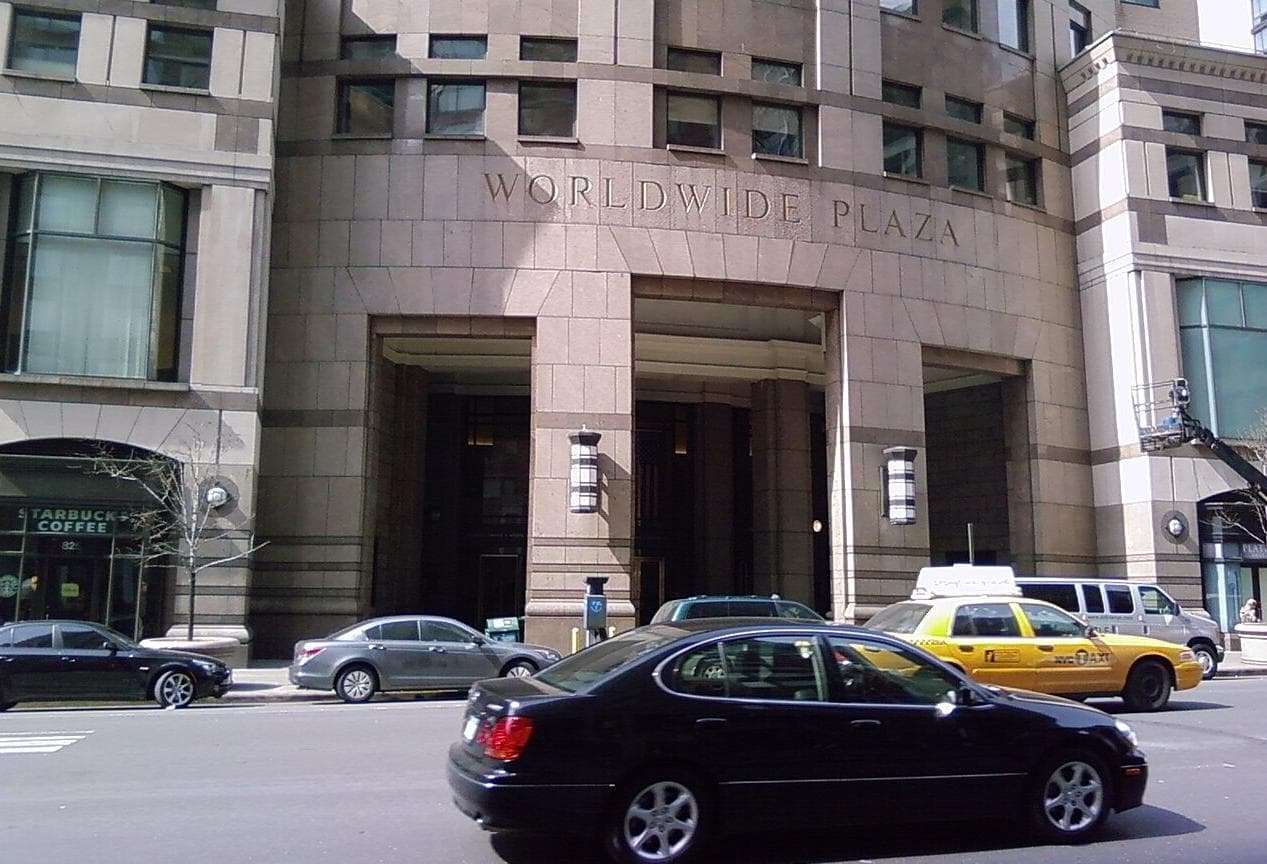
Cushman & Wakefield has replaced SL Green as property manager of Worldwide Plaza, a nearly 2 million square foot Midtown Manhattan office tower at the centre of a multi-party foreclosure dispute. A court-appointed receiver, Hilco Global's Matthew Mason, oversaw the transition after a judge approved the management transfer by 1 July. The building is financially distressed: monthly net operating income is negative $484K, occupancy sits at just 51% (lower than SL Green's reported 61%), and anchor tenant Cravath, Swaine & Moore vacated 617,000 SF in 2024. WNET is preparing to exit a further 95,000 SF. A $940M senior mortgage is in foreclosure, a $190M mezzanine loan is being pursued by Extell Development via UCC foreclosure, and a $70M junior mezzanine loan is in monetary default. Bondholders face potential losses of up to $488M.
Our take
While this drama plays out in New York, it carries direct lessons for South African commercial property stakeholders — particularly institutional investors, listed property funds (REITs), and commercial landlords navigating post-pandemic office vacancies. The Worldwide Plaza case illustrates how quickly a single large tenant departure can unravel an entire capital stack. In the SA context, landlords in Sandton, the Cape Town CBD, and Umhlanga are grappling with similar anchor-tenant risk as hybrid work reshinks space requirements. When a major occupier exits, valuations drop, loan covenants breach, and refinancing becomes near-impossible — a sequence South African property funds should stress-test now. For SA investors in offshore listed property or global CMBS instruments, this is a reminder that single-asset securitised debt carries concentrated risk that diversified funds do not. Local asset managers should scrutinise offshore exposure carefully. For commercial agents and landlords locally: occupancy transparency matters. The gap between SL Green's reported 61% and the receiver's verified 51% highlights how self-reported figures can mislead. Tenants, lenders, and co-investors should insist on independently verified occupancy data — a principle equally applicable on the JSE-listed property sector.